
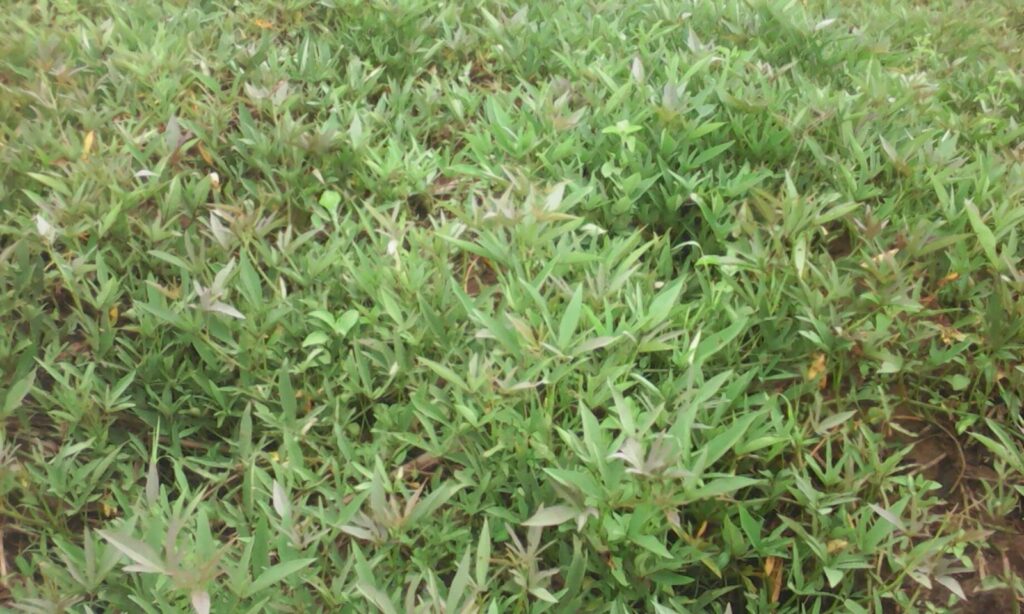
Sweet potato vines
Crop rotation is one of agricultural practice that can be used to boost soil health. It involves growing different types of crops on the same piece of land in different seasons without relying on one crop over a period of time.
It depends on the choice of the farmer on which type of crop he /she wants to alternate in a particular season, for example planting maize and alternating following season with sweet Potatoes . Crop rotation prevents nutrients depletion, improving soil structure ,control pests and diseases ,improves soil health by adding some nutrients to the soil example being leguminous crops such as beans, soybeans, groundnuts and many more which helps in adding nitrogen.
Best crop that can also be applied in crop rotation in western Kenya is Sweet Potatoes .Sweet Potatoes can help in aeration and water movement and adding organic matter to the soil.
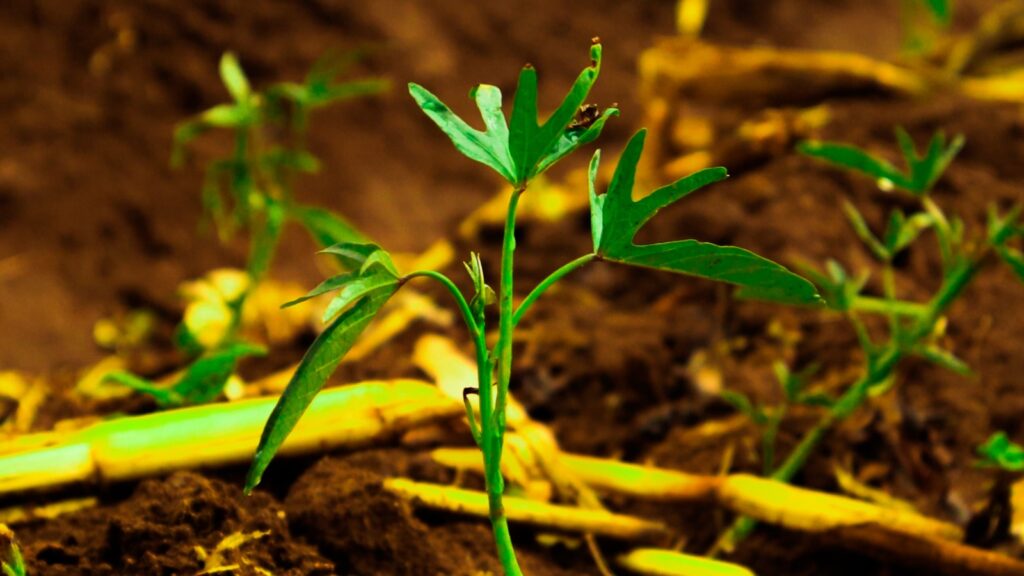
Sample of sweet potato vine .Photo by ;Alujo
Monica Awuor ,resident of Emukaba village ,Lurambi subcounty Kakamega county has been practicing crop rotation on small scale through planting Sweet Potatoes .She says it has helped in improving her soil health over the years as she interchanges Sweet Potatoes and Maize farming in different years .
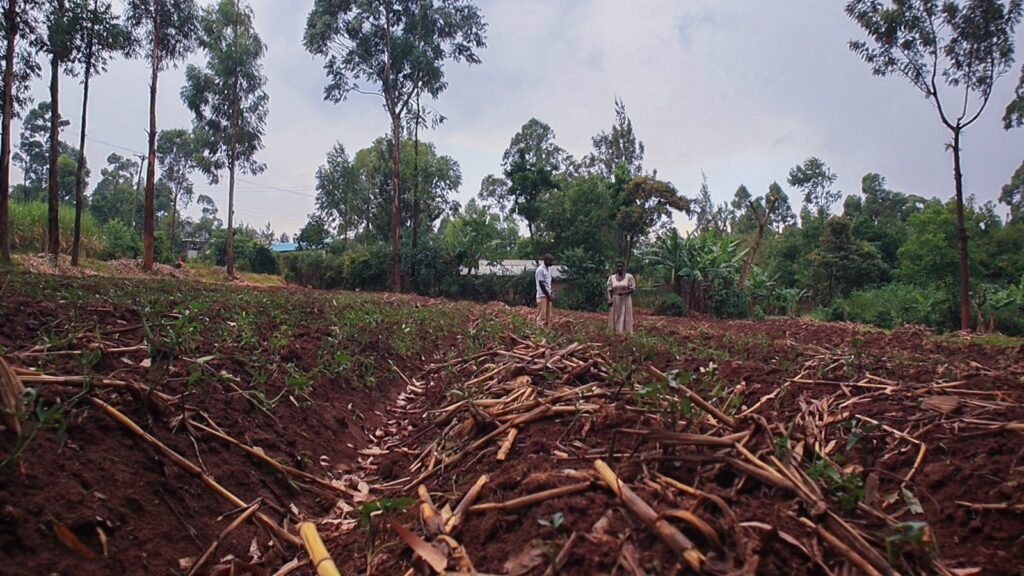
Kennedy Babangida (Left), Monica Awuor (Right) ,Photo by ;Alujo
According to Monica Awuor, some of the reasons why Sweet Potatoe farmers have been recording low yields may range from Poor timing when planting as they do well during dry season, Farmers not getting right type of vines to plant, and Poor approach when planting Sweet among others. Sweet Potatoe takes 3 months to mature and weeding after planting should be done .
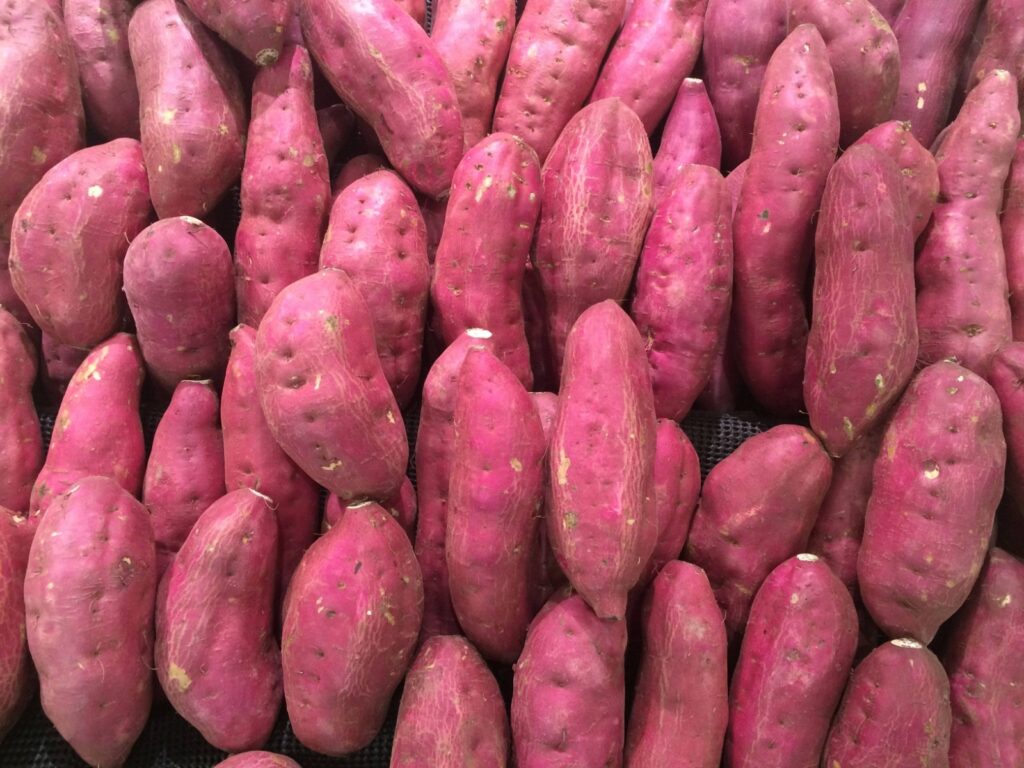
Sweet Potatoes
Monica Awuor says Sweet Potatoes can be used to source other products through its flour which can be used to prepare Porridge,Chapati , Mandazi and other snacks which can be sourced from Sweet Potatoes. Using Sweet Potatoe farming in crop rotation is all about sustainable farming on ehancing fertility of the soil .There is need to alternate crops in different seasons to prevent depletion of nutrient by one crop.